Epoxy Flooring in New Berlin, WI, Built From the Slab Up

Every floor is ground open and moisture tested before a coating goes down, and the proposal names the product and the finished thickness.

New Berlin Epoxy Flooring has spent more than 20 years putting down epoxy flooring in New Berlin, WI, from two-car garages and finished basements to machine shops, warehouses and restaurant kitchens. Our work covers epoxy garage floors, flake and metallic systems, polyaspartic coatings, polished concrete, ESD floors and the concrete repair that has to come before any of them.

We start every job with the slab rather than the color chart. A coating is only as good as its bond, so we grind or shot blast the surface open, test it for moisture, and repair cracks and joints before a single coat is rolled. When a slab is too far gone to coat, we say so plainly instead of selling a finish that will fail.

Every proposal names the product, the system build and the finished thickness. That way what was quoted can be checked against what went down, and two bids can be compared on substance rather than on a headline price.

Get Your Free Quote

Fast response • No obligation

So we can reach you about your request.

So we can send you a confirmation after you submit this inquiry form.

  • 20+ Years on Concrete
  • Moisture Testing in Every Scope
  • Written Contract Before Any Deposit

What we do

Our Services

Epoxy garage, basement and commercial floors in New Berlin, WI

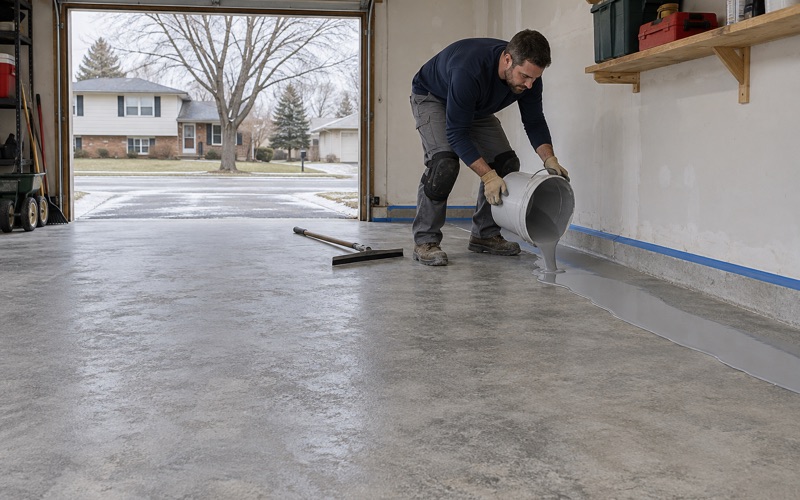
Fresh gray base coat poured in a ribbon across a ground garage slab in a New Berlin split-level, ready to be spread.

Epoxy Garage Floor

Ground, moisture-tested epoxy garage floors with a polyaspartic topcoat built to shrug off road salt, hot tires and oil.

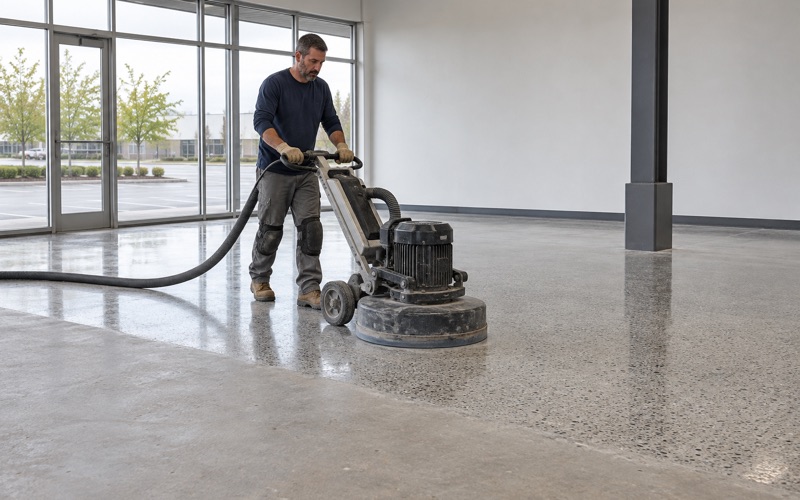
A walk-behind polisher bringing up a salt-and-pepper polished concrete floor in a New Berlin business park showroom.

Polished Concrete Floors

Ground, densified and polished concrete floors for warehouses, retail, offices and dry basements, with the aggregate look chosen up front.

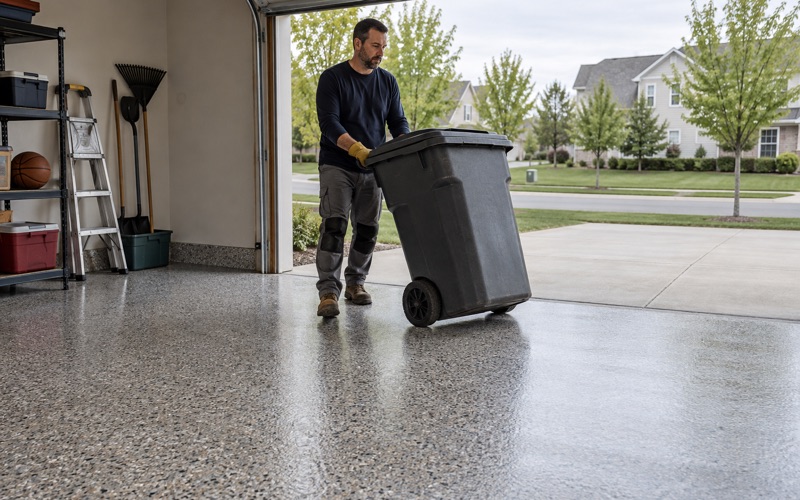
A trash cart wheeled back into a New Berlin garage the same afternoon its polyaspartic flake floor was laid.

Polyaspartic Floor Coating

Fast-curing, color-stable polyaspartic floor coatings for garages, showrooms and working floors, installed over a ground and tested slab.

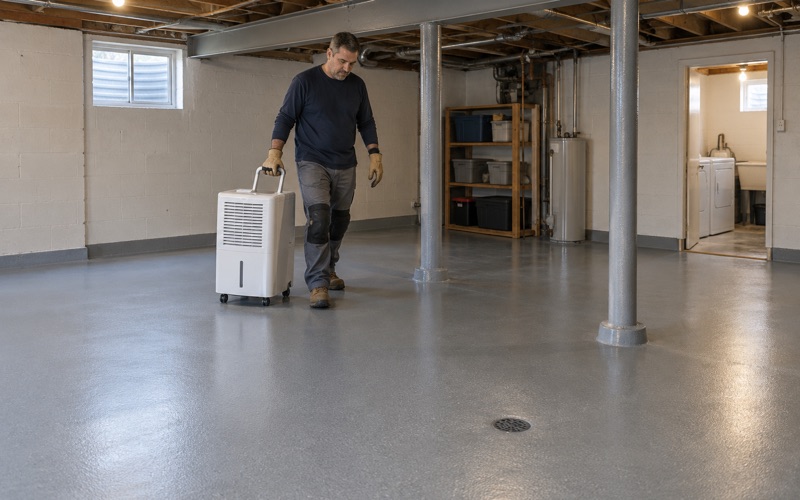
A dehumidifier wheeled back into place on a new epoxy floor in the basement of a New Berlin ranch house.

Basement Floor Epoxy

Moisture-tested basement floor coatings for rec rooms, gyms, laundry and storage, with a straight answer when water is the real problem.

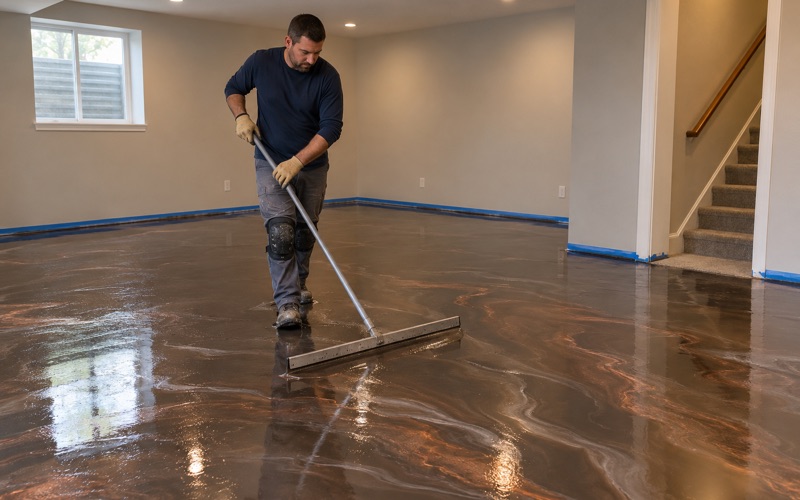
Metallic epoxy spread across a finished basement in New Berlin, silver and copper veins moving behind the squeegee.

Metallic Epoxy Floor

Hand-worked metallic epoxy floors with depth and movement, for finished basements, showrooms, salons and offices, sealed with a color-stable topcoat.

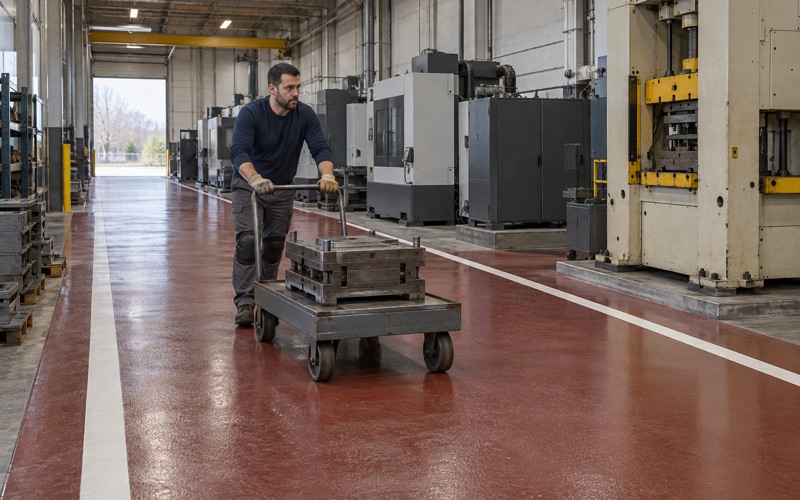
A die cart pushed down the urethane cement aisle of a metal-stamping plant in the New Berlin Industrial Park.

Industrial Epoxy Flooring

High-build epoxy, urethane cement and joint systems for plants, warehouses and shops, phased around shifts, weekends and shutdown weeks.

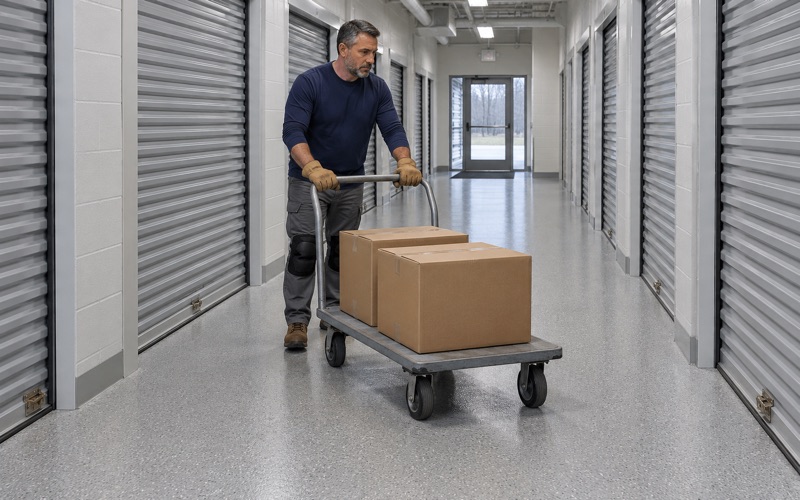
A flatbed cart pushed down the quartz-textured corridor of a climate-controlled self-storage building in New Berlin.

Commercial Epoxy Flooring

Seamless, easy-clean epoxy and polyaspartic floors for storefronts, offices, dealerships, clinics, gyms and restrooms, phased around business hours.

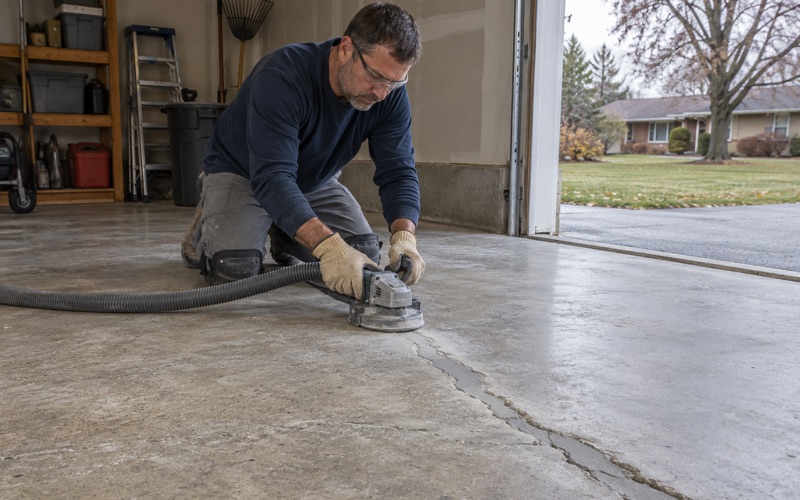
A chased crack filled with repair mortar and ground flush on a New Berlin garage slab, ready for coating.

Concrete Floor Repair

Crack, spall, joint and scaling repair for garage, basement and commercial slabs, done right before a coating or as a stand-alone fix.

Dense vinyl flake settled into the base coat of a New Berlin garage floor, the installer checking the last strip of coverage.

Flake Epoxy Floor

Full-broadcast vinyl flake floors in dozens of blends for garages, basements, locker rooms and shops, sealed with a clear, color-stable topcoat.

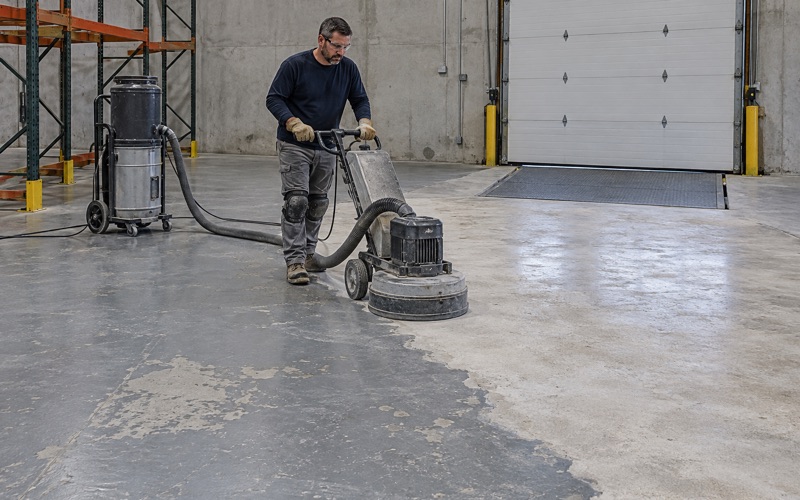
A planetary grinder stripping a failed coating back to clean concrete in a New Berlin business park warehouse.

Concrete Grinding

Diamond grinding and shot blasting to remove coatings and adhesives, flatten high spots and profile concrete for coatings, overlays or new flooring.

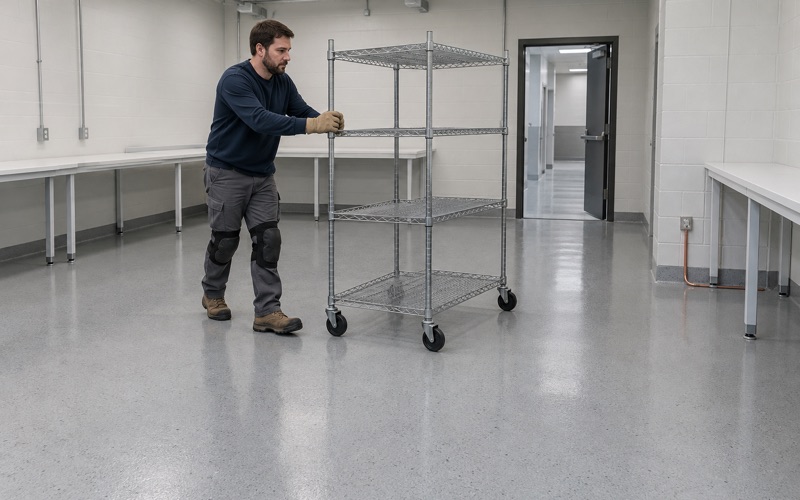
A parts rack rolled across a finished static-dissipative floor in an electronics assembly room in New Berlin.

ESD Flooring

Static-dissipative and conductive resin floors for electronics, automation and controls work, grounded, tested and documented at completion.

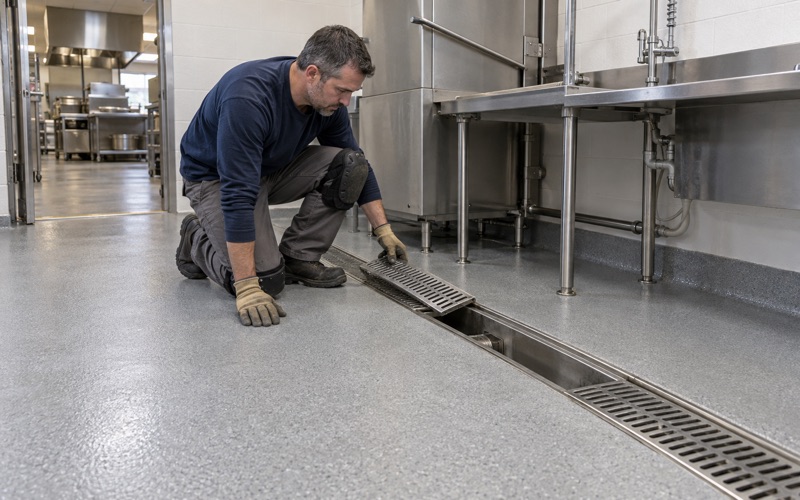
A trench drain grate lifted from the seamless urethane cement floor of a New Berlin restaurant's dish room.

Commercial Kitchen Flooring

Seamless urethane cement and quartz kitchen floors with integral coved base and slope to drain, installed overnight so the kitchen keeps serving.

Two Decades on Wisconsin Concrete

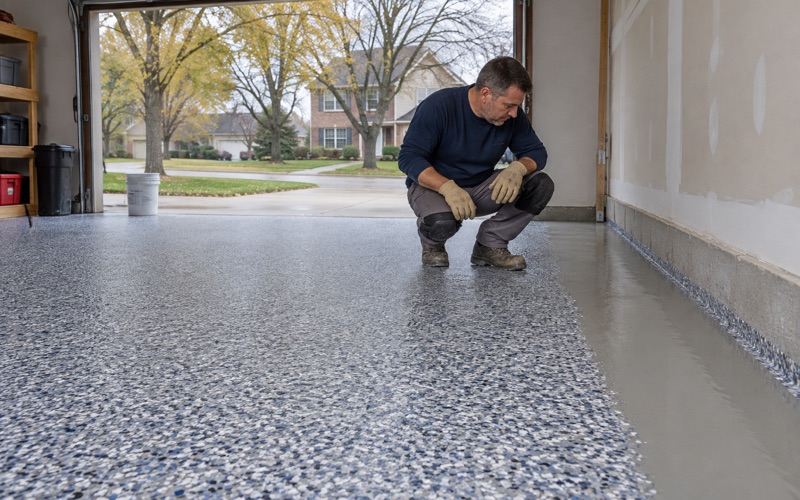
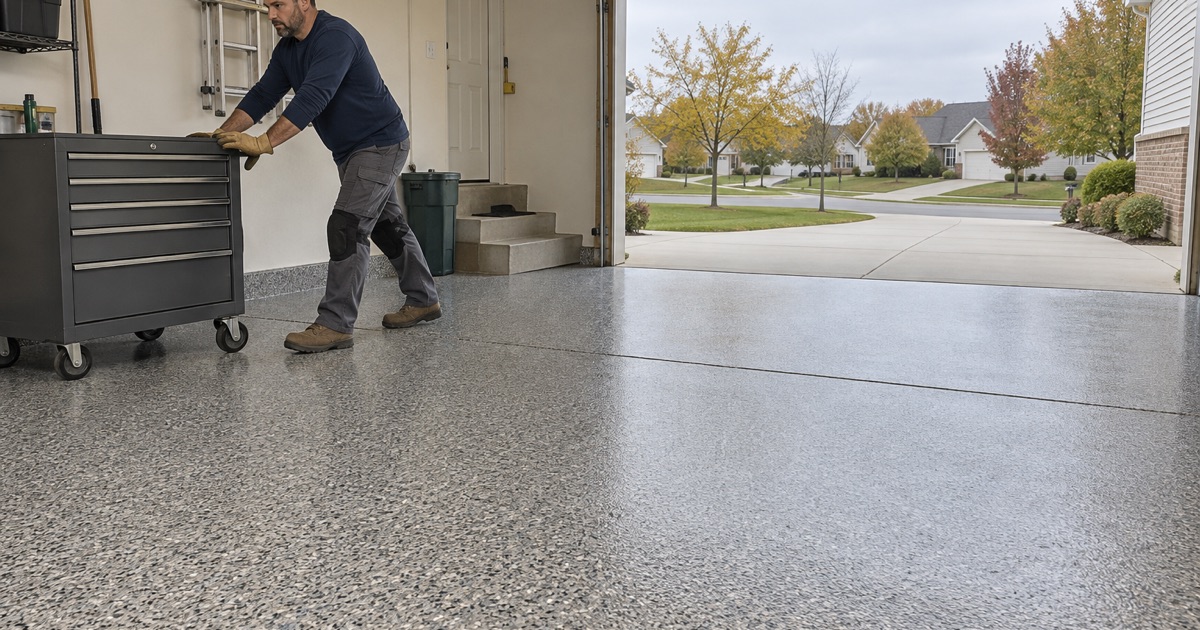
A rolling tool chest pushed back to the wall on a new gray flake floor in the attached garage of a New Berlin two-story house.

More Than 20 Years of Floor Coating Work

We have been preparing and coating concrete for more than two decades. That time has taught us that nearly every failed floor traces back to preparation, moisture or curing conditions, which is why those three steps get the most attention on our jobs.

Why Choose New Berlin Epoxy Flooring

Mechanical Prep, Never Acid

Every slab we coat is opened with a diamond grinder or shot blaster to a measured profile, so the primer bites into clean concrete rather than sitting on laitance and old sealer. Acid etching leaves residue and an uneven profile, and it is the shortcut behind most peeling kit floors.

Moisture Tested in the Scope

No garage or basement slab gets coated on a guess. Moisture testing is written into the scope from the start, because Wisconsin does not require a vapor retarder under an unconditioned attached garage, so a dry-looking New Berlin floor can still be pushing vapor up, rather than being discovered after the coating blisters.

Built for Brine and Rock Salt

Garage systems are specified for the calcium chloride brine and rock salt a New Berlin winter tracks in on the tires, so the topcoat and thickness are chosen for months of wet salt slush. A thin decorative coat that looks good in July and wears through by March is not what we install.

Permits Asked, Not Assumed

Before a slab replacement, accessory-building slab or basement finish is scheduled, we ask the City of New Berlin Department of Community Development or the local inspector whether a permit applies. Starting first and asking later can double a permit fee and stall a job halfway.

Exclusions Read Out Loud

Warranty exclusions are read before the job is sold, with moisture from below named first. You know exactly what the coating covers and what it does not, instead of learning it from a claim denial.

The Garage Floor, Start to Finish

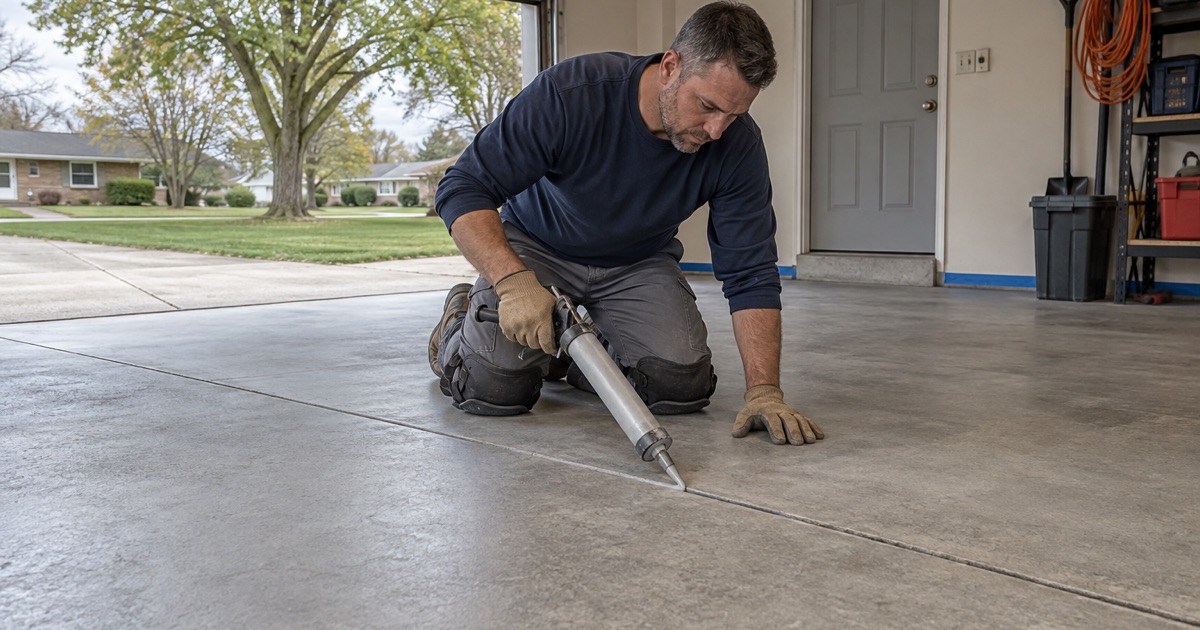
A saw-cut control joint being filled flush across a freshly ground garage slab in a New Berlin ranch house, before the first coat.

What an Epoxy Garage Floor Job Involves

A garage job begins with a walk of the slab, where we read cracks, joints, stains and any old coating and test for moisture. Then comes grinding, repair, a primer, the build coat with any flake or quartz, and a topcoat, followed by cure time before you drive on it. Knowing every step up front keeps the schedule honest.

Grinding Open a Sealed or Painted Slab

Garage concrete often carries a curing compound, a sealer or old paint that a coating cannot bond through. We grind to an ICRI concrete surface profile suited to the system, usually CSP 2 to 3, so the primer anchors into sound concrete. A coating rolled over a sealed surface is bonded to the sealer, and it lets go when the sealer does.

Testing Garage Slab Moisture

The Wisconsin Uniform Dwelling Code requires a vapor retarder under most floors but excepts an unconditioned attached garage, so many garage slabs sit directly on the base with nothing to stop vapor. We run a plastic sheet test to ASTM D4263 and, where the reading warrants it, calcium chloride testing to ASTM F1869 before choosing a primer.

Coating Versus Replacing a Garage Slab

A slab with scaling, settled sections or deep structural cracks may need replacement rather than a coating. New Berlin’s permit table names no permit for a coating, a slab replacement or flatwork and tells owners to ask, so we contact the Department of Community Development before scheduling slab work rather than guessing.

Road Salt and Calcium Chloride Brine

Rock salt and calcium chloride brine soak into bare concrete, recrystallize as the slab dries and scale the surface away in flakes. A sealed, coated floor keeps that brine on top where it can be squeegeed out the door. That is the single biggest reason New Berlin homeowners coat a garage at all.

Winter Garage Coating

Resin cures by chemistry, and a cold slab slows that chemistry or stops it short of full strength. We schedule against slab temperature and the dew point spread at the surface, so a heated garage can be done in January while an unheated one may wait for spring. A coating rushed onto a cold slab rarely reaches the hardness it was sold on.

Hot Tire Pickup and Where You Park

Tires heated on the drive home soften a thin or underbuilt coating, and when they cool they pull it off the slab. Our garage systems use a 100% solids epoxy base and a polyaspartic or polyurea topcoat built to a stated thickness, so the parking spots hold up as well as the rest of the floor.

Bubbles, Pinholes and Outgassing

Concrete holds air in its pores, and as a slab warms that air rises into a fresh coat and leaves pinholes or bubbles. We prime when the slab temperature is steady or falling and use a penetrating primer to seal the surface first. The result is a smooth build coat rather than a floor full of craters.

Kits Versus a Professional System

A box kit is usually a thin water-based epoxy applied after an acid etch, which is why so many peel within a few seasons. A professional system uses a grinder, a moisture test, repairs, a high-solids base coat and a real topcoat. The difference shows up after the second winter, not the first week.

What Moves the Price of a Garage Floor

Price follows the slab’s condition, the size of the space, the amount of crack and joint repair, and the system chosen, from a solid color coat to a full flake broadcast with a polyaspartic topcoat. Removing an old coating adds grinding time. We price after seeing the slab, and the proposal shows each of those lines.

Slabs for Detached Garages and Pole Barns

New Berlin requires accessory buildings over 144 square feet, such as detached garages, pole barns and pool houses, to sit on a foundation or concrete slab. When that new slab is going to be coated, we talk about finish, curing time and moisture before the concrete is poured, because the first month of a new slab decides what can go on it.

Basements and the Water Under Them

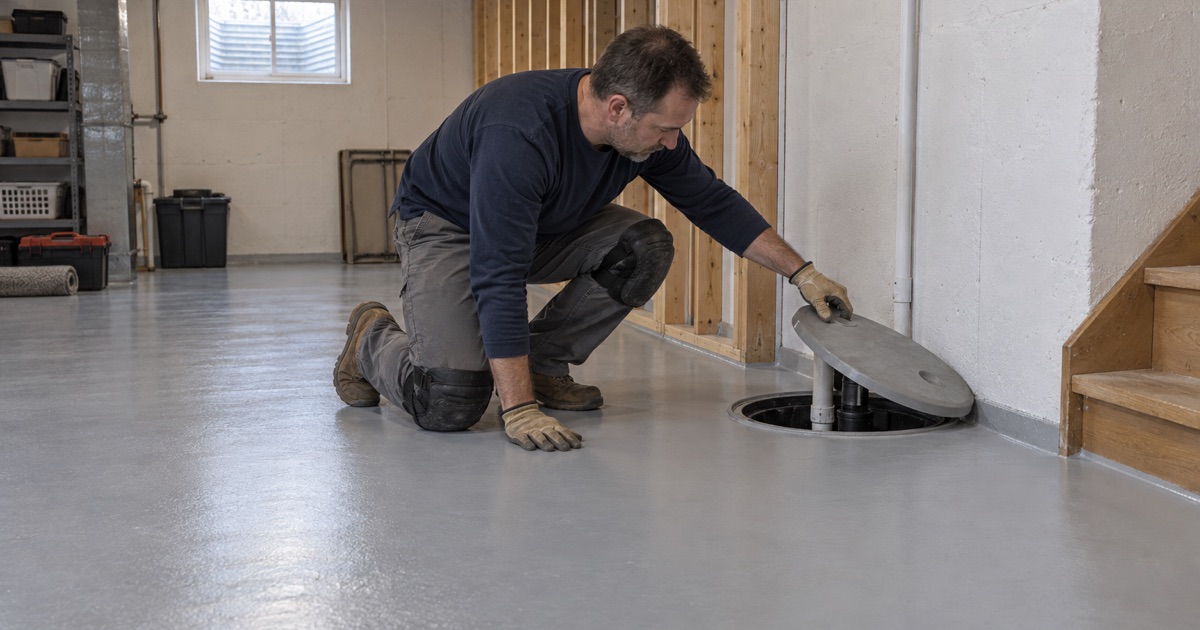
A new basement floor coating turned down cleanly to the rim of the sump basin in a New Berlin home, the lid tipped up to show it.

The Moisture Question Before a Basement Coating

Basement slabs sit in the ground, so moisture is the first thing we test, not the last. Relative humidity probes to ASTM F2170 tell us what is happening inside the slab, and the reading decides whether a standard primer will hold or a moisture-mitigation primer is needed.

Summer Sweating on a Basement Slab

In humid weather, warm air meets a cool basement floor and condenses on it, leaving a damp surface that looks like a leak. Condensation is a surface problem that a dehumidifier often solves, while vapor drive comes from below. We separate the two before deciding anything about a coating.

Hydrostatic Pressure Under a Basement Floor

When groundwater rises against the underside of a slab, it can push water and dissolved salts up through the concrete hard enough to lift a coating. A floor can look dry for months and still be under pressure in a wet spring. That is why we test and ask about seasonal water before we quote.

Efflorescence on a Basement Floor

White powder on concrete is efflorescence, salts carried up by moving water and left behind when it evaporates. It is a sign that moisture is moving through the slab, and coating over it without addressing the cause invites failure. We remove it mechanically and treat its presence as a moisture finding, not a cleaning job.

Sump Pits, Floor Drains and Edges

The edges of a basement floor, the rim of a sump pit and the area around a floor drain are where water arrives first and coatings fail first. We detail these spots by hand, keep drains open and sloped, and terminate the coating cleanly rather than running it into places that stay wet.

Keeping the 7-Foot Ceiling in a Finished Basement

New Berlin’s recreation room handout measures the required 7 feet from the basement floor to the underside of the finished ceiling. A thin coating leaves that clearance unchanged, while a built-up subfloor can push a low basement under the line. A basement finish that adds rooms also needs building, electrical and plumbing permits.

Home Gyms, Playrooms and Workshops

A coated slab handles dropped weights, spilled paint and rolling toys better than carpet or vinyl over damp concrete. We choose the texture for the use, with more grip for a gym and an easier-cleaning finish for a workshop, so the floor fits the room rather than a showroom photo.

Radon and Floor Coatings

A floor coating is not radon mitigation, and we do not sell it as one. Radon is addressed with testing and a mitigation system installed by a specialist, and a coating does not replace that. If you are concerned about radon, test first and plan the floor after.

What a Coating Warranty Excludes

Moisture vapor and hydrostatic pressure from below head the exclusion list on nearly every coating warranty, followed by impact, chemical attack and improper use. We read those exclusions out before the job is sold. That conversation is far easier before installation than after a blister appears.

Color, Flake and Finish

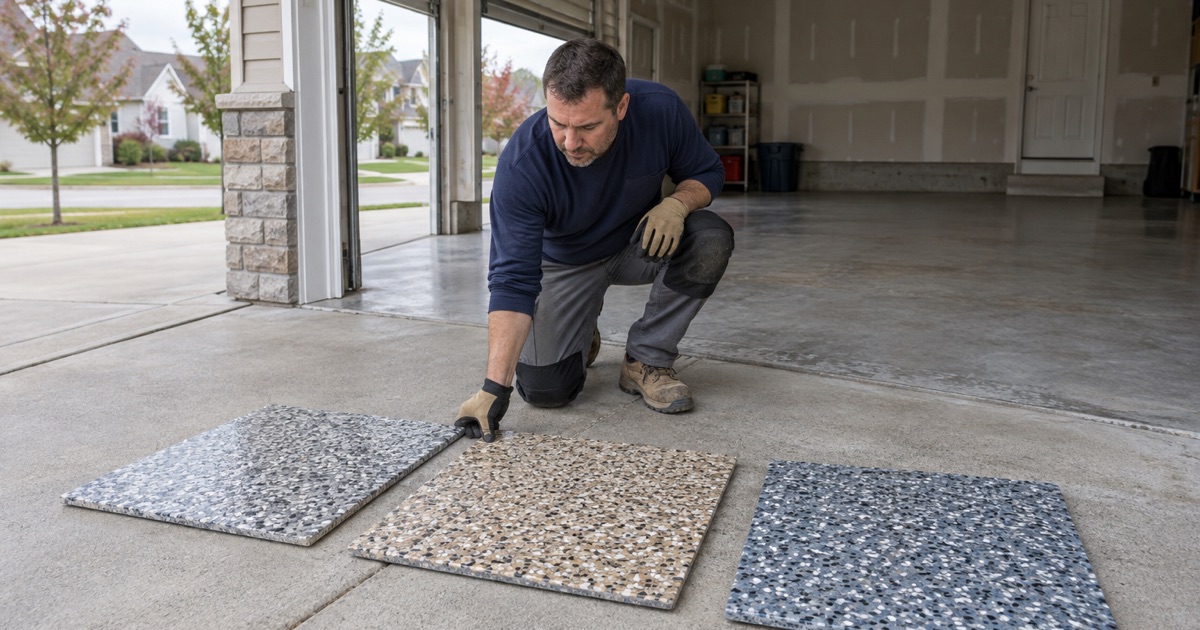
Three coated flake sample boards laid side by side on a New Berlin driveway to compare blends in daylight before the garage floor is coated.

Vinyl Flake Blends and Chip Sizes

A vinyl flake broadcast hides dust, small imperfections and tire marks, and the blend and chip size change the look from speckled to stone-like. Smaller chips read busy and uniform, while larger chips read bolder. We broadcast to full rejection for the most even, durable surface and seal it with a clear topcoat.

Metallic Epoxy Floors

A metallic epoxy floor uses pigments suspended in clear resin that are worked by hand to create a marbled, depth-filled look. It needs a flat, well-prepared slab and a skilled crew, because every movement of the roller shows. It suits basements, showrooms and offices more than a working garage.

Polished Concrete and Aggregate Exposure

Polished concrete is the slab itself, ground through progressively finer diamonds and hardened with a lithium silicate densifier. How deep we grind decides whether you see cream, fine salt-and-pepper aggregate or larger stone. It is a strong choice for dry, sound slabs that will see heavy foot traffic.

Gloss, Satin and Matte Finishes

High gloss shows every footprint and swirl of dust, while satin and matte topcoats hide them better and read more like natural stone. Sheen also changes how slippery a wet floor feels. We show samples in the actual light of your space before you choose.

Quartz Broadcast Floors

Colored quartz aggregate broadcast into the resin gives a floor built-in texture and color in one step. It is a common choice for commercial kitchens, locker rooms and ramps where grip matters as much as appearance. The texture can be tuned by the size of the quartz and the number of topcoats.

Solid Color Coatings

A solid color coating is the simplest, most utilitarian system and is often the right answer for a workshop, mechanical room or warehouse aisle. It is easy to clean and easy to touch up. Plain is not cheap when it is built to the same thickness as a decorative floor.

Sunlight and Ambering

Many epoxies yellow, or amber, when exposed to ultraviolet light through an open garage door or a window. Aliphatic polyaspartic and polyurethane topcoats hold their color far better. On floors that see daylight, we specify a color-stable topcoat rather than leaving epoxy exposed.

Saw-Cut Lines, Borders and Logos

Decorative saw cuts, color borders and inlaid logos turn a plain slab into a designed floor. Existing control joints can be honored as part of the layout rather than hidden. We plan these details before grinding so the pattern lines up with walls and doors.

Plant Floors, Warehouses, Kitchens and Showrooms

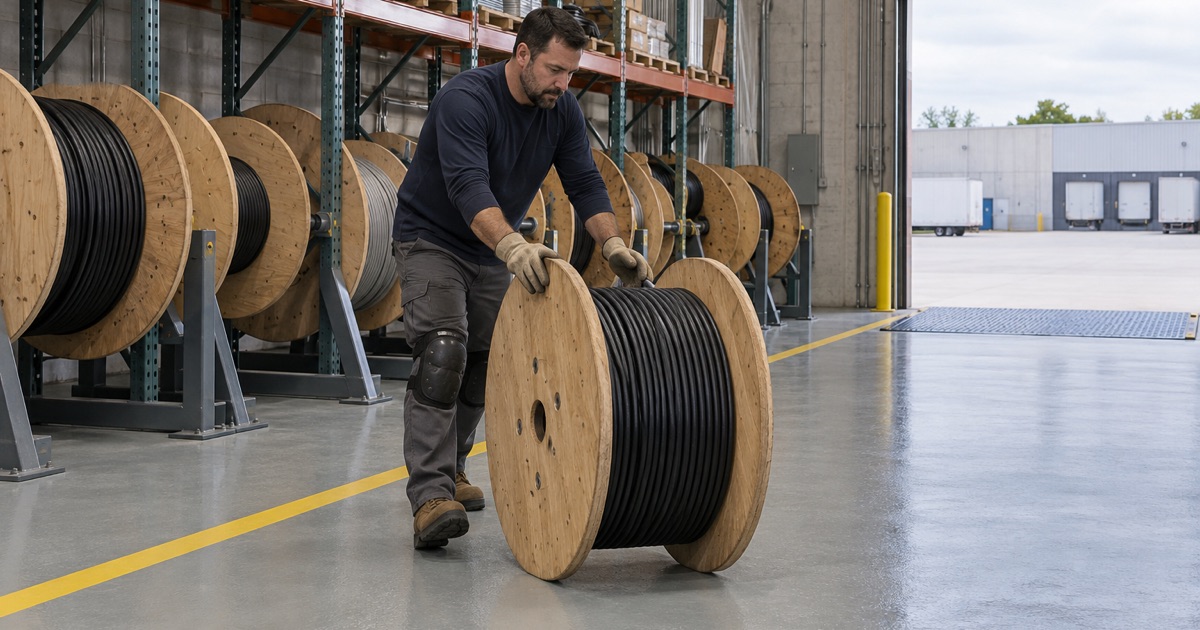
A cable reel rolled along a striped lane on the coated warehouse floor of an electrical contractor in a New Berlin business park.

Commercial Versus Residential Floor Work

Commercial floors carry heavier loads, harsher chemicals, tighter schedules and building codes that residential garages do not. The 2021 International Building Code, adopted in Wisconsin through SPS 361, governs commercial construction, and OSHA’s walking-working surfaces rule, 29 CFR 1910.22, sets expectations for floors kept clean, dry and free of hazards. Specifications are written around use, not looks.

Machine Shop and Fabrication Floors

Cutting coolant, hydraulic oil and hot metal chips are hard on concrete and hard on thin coatings. We build machine shop floors with chemical-resistant epoxy and a textured topcoat where coolant makes the floor slick. The goal is a floor that cleans up at the end of a shift and does not soak in oil.

Warehouse and Distribution Floors

Forklifts, pallet jacks, racking and dock traffic concentrate load in small areas and wear a path down the aisles. We specify thicker systems in drive lanes and at dock plates, and coordinate aisle and safety striping with the operator. A warehouse floor is judged on how it looks after a year of turning forklifts.

Filling Joints Before Forklifts Cross Them

Open control joints chip at the edges every time a hard wheel crosses them, and a coating alone cannot stop that. We fill plant and warehouse joints with a semirigid joint filler before coating, so wheels roll across a supported edge. It is one of the cheapest steps on a commercial floor and one of the most important.

Working Around Production Schedules

Industrial park floors, including those in the New Berlin Industrial Park, rarely shut down for long. We schedule work around shift breaks, weekends and planned shutdown weeks and phase large floors so production keeps moving. Fast-cure systems can return an area to service quickly when the window is short.

Dealership Service Drives and Showrooms

Service drives see wet tires, road salt, oil and constant turning, while showrooms need a finish that flatters the vehicles. We often use a durable flake or quartz system in the service area and a cleaner, higher-sheen finish in the showroom. Each area is built for its own traffic.

Restaurant Kitchen Floors and Plan Review

New Berlin restaurants are licensed and plan reviewed by Waukesha County Environmental Health under the Wisconsin Food Code. FDA Food Code 6-201.13 calls for coved floor and wall junctures in many food areas, so we install an integral coved base and keep floors sloped to drain. We plan the floor around the plan review rather than retrofitting after an inspection.

Floors for Contractors’ Shops and Warehouses

Electrical, mechanical and building-services contractors run shops that combine light fabrication, storage and vehicle bays under one roof. We match each zone to its use, with tougher coatings where equipment is staged and easier-cleaning finishes in offices and break rooms. One building can need three different systems.

Urethane Cement for Hot Washdown

Where floors see hot water washdown, thermal shock and food acids, epoxy can crack or delaminate. Urethane cement tolerates those conditions and is the usual choice for food production and commercial kitchens. Wisconsin’s food processing plant rule, ATCP 70, expects floors in those plants to be durable, easily cleanable and drained.

Static-Dissipative and ESD Floors

Electronics assembly and automation work needs floors that bleed static charge to ground in a controlled way. Static-dissipative and conductive systems are installed to a specified resistance range, with copper grounding and testing at completion. A standard epoxy floor does none of that.

Where Grinding Slurry Goes

Grinding produces fine concrete dust and, on wet work, cement slurry. We collect dust at the machine with industrial vacuums and bag slurry on site, and none of it goes into a floor drain or storm sewer. Concrete fines in a drain can clog a line and are not something a building owner wants on their record.

VOC Rules for Floor Coatings

Wisconsin has no state architectural coating VOC rule, so the federal standard, 40 CFR 59 Subpart D, sets the limits manufacturers and importers must meet for products sold. It binds the companies that make and sell coatings rather than the installer. We favor low-odor 100% solids and polyaspartic systems in occupied buildings regardless.

Areas We Serve

New Berlin Epoxy Flooring provides epoxy-flooring throughout the greater New Berlin area, with the same crews and the same standards on every job.

Good to know

Frequently Asked Questions

How long does an epoxy garage floor take from start to finish?

Most two-car garages are prepared and coated over one to two working days, then need cure time before foot traffic and longer before a vehicle is parked. The real schedule is set by slab temperature and dew point on the day, not by the calendar, so we confirm the return-to-service date once we have measured the slab.

Do you need a permit to coat a floor in New Berlin?

New Berlin's permit table does not list a permit for coating an existing slab, and it tells owners to ask city staff when a job is unclear. We ask the Department of Community Development before scheduling any job that touches a slab replacement, a new accessory building or a basement finish, which does carry building, electrical and plumbing permits.

What makes your quote different from a lower one?

Our proposal names the product, the system build and the finished thickness, so it can be compared line for line. A lower number often skips the grinder, the moisture test or the crack and joint repair, and those are exactly the steps that decide whether a coating stays bonded.

Is a written contract required for a home floor job?

We put every residential job in a written contract before any deposit is taken, with the products and any warranty spelled out. Wisconsin's home improvement practices rule, ATCP 110, sets expectations for home improvement contracts, and we would rather the paperwork be clear than argue about it later.

Will epoxy fix water coming up through my basement floor?

No. A floor coating is not a waterproofing system, and moisture or hydrostatic pressure from below is the most common reason a coating lets go. We test first, and if water is the problem we say so and recommend dealing with drainage before any coating is discussed.

Which is better for a garage, epoxy or polyaspartic?

Both work when the slab is prepared properly. A 100% solids epoxy base builds thickness and bond, and a polyaspartic or polyurea topcoat resists abrasion and holds its color in sunlight, so many garage floors use the two together rather than choosing one.

Can you coat a floor in winter?

A heated garage, basement or plant can usually be coated year round. An unheated garage has to wait until the slab stays warm enough and far enough above the dew point for the coating to cure, and we would rather move the date than coat a cold slab.

Do you work in occupied commercial buildings?

Yes. Plant and warehouse floors are scheduled around production in shift breaks, weekends and shutdown weeks, and areas are phased so the rest of the building keeps running. Grinding dust is collected at the machine and slurry is bagged on site.

What does a coating warranty usually leave out?

Most coating warranties exclude failures caused by moisture vapor or hydrostatic pressure from below, and many also exclude damage from impact, chemical spills and hot tires on lower-grade systems. We read the exclusions out loud before a job is sold, moisture first.

Ready to Get Started?

Request a free quote today and we'll get back to you fast.