New Berlin Epoxy Flooring installs polyaspartic floor coating in New Berlin, WI, serving surrounding cities including Hales Corners, West Allis, Greenfield, Brookfield and Waukesha. In more than 20 years of coating concrete, we have seen polyaspartics go from a specialty product to one of the most useful tools we have, especially for garages and floors that cannot stay out of service for long.
Polyaspartic is a fast-curing aliphatic coating related to polyurea. It resists abrasion, holds its color in sunlight and stands up well to the road salt and calcium chloride brine that come into Wisconsin garages all winter. Those qualities make it our usual topcoat, and on some floors the whole system.
What polyaspartic does not do is make preparation optional. A fast-curing coating on a poorly prepared slab simply fails faster, so every job still starts with grinding, repairs and a moisture reading, and your proposal names the product, each coat and the finished thickness.
What a Polyaspartic Coating Is
How It Differs From Epoxy
Epoxy is a two-part resin that cures slowly, wets out concrete well and builds thickness, which makes 100% solids epoxy an excellent base coat. Polyaspartic cures much faster and is harder on the surface, with better resistance to scratching and ultraviolet light. That is why the two are so often paired, with epoxy below and polyaspartic on top.
Which build fits your floor depends on the slab, the use and the schedule. We explain the trade-offs in plain terms and write the chosen system into the proposal.
Color Stability in Sunlight
Most epoxies yellow, or amber, over time under ultraviolet light. Aliphatic polyaspartics hold their color far better, so a garage with a south-facing door or a showroom with large windows keeps its look. When a floor sees daylight, we specify a polyaspartic or polyurethane topcoat rather than leaving epoxy exposed.
Fast Cure and Short Pot Life
Polyaspartic cures quickly, which is its main advantage and its main installation challenge. Once mixed, it has a short working time, so it is mixed in small batches and placed by a crew that knows the product. Rushed or overmixed material can leave lap marks or cure before it levels.
The fast cure also shortens the window for outgassing to form pinholes, but only if the slab is primed and stable first. We prime when the slab temperature is steady or falling so rising air does not bubble through the fresh coat.
Polyaspartic Floors for New Berlin Homes
Garages and Road Salt
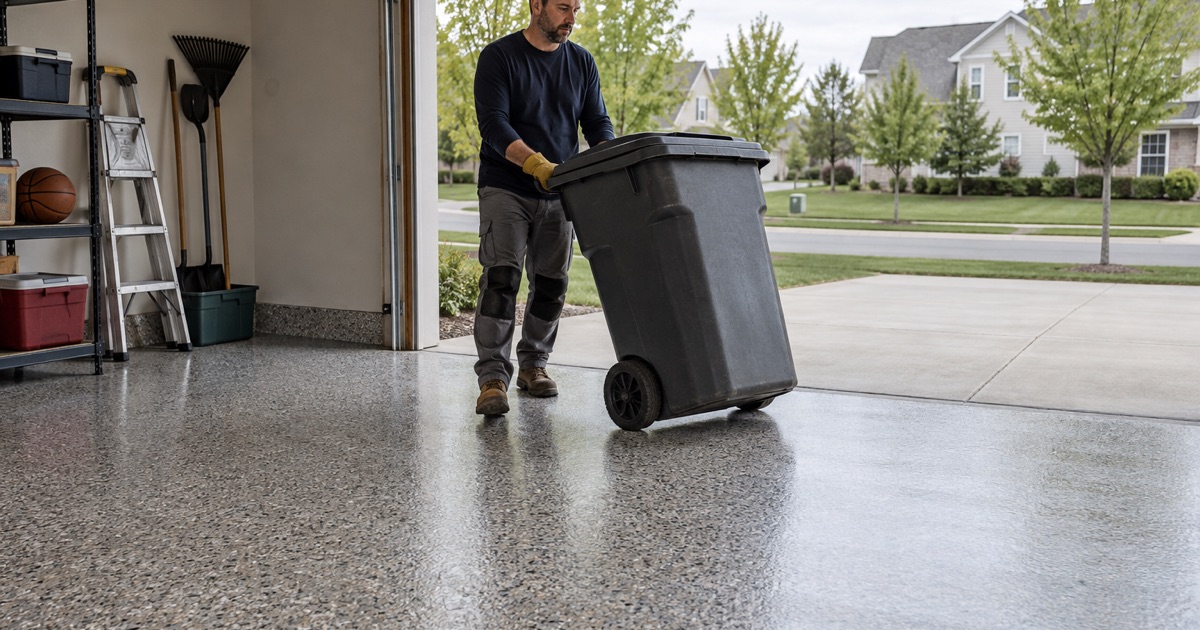
Rock salt and calcium chloride brine are hard on bare concrete and on soft coatings. A polyaspartic topcoat resists those deicers along with oil, gasoline and antifreeze, so slush can be squeegeed off without staining or softening the floor. Paired with a full vinyl flake broadcast, it gives a textured, forgiving surface for winter use.
We also build to a thickness that resists hot tire pickup, where heated tires soften and pull up a thin coating in the parking spots. That thickness is written into your proposal.
One-Day Floors, Explained Honestly
Polyaspartic systems are often sold as one-day garage floors, and on a sound, dry slab the coating steps can be done in a day. Slabs that need heavy grinding, crack repair or old coating removal take longer, and parking waits for the coating to reach working strength. We schedule from the slab you have.
Basements and Living Spaces
Polyaspartic works well in basements, mudrooms and home gyms because of its low odor compared with some solvent-based products and its fast return to use. The basement slab still has to be moisture tested first, because polyaspartic is not a moisture barrier and will not stop water coming up through the floor.
Commercial Polyaspartic Coatings
Fast Return to Service
In plants, warehouses and shops, downtime is the hidden cost of any floor project. Polyaspartic’s fast cure lets us coat sections during shift breaks, weekends and shutdown weeks and hand them back sooner. In industrial park buildings, including the New Berlin Industrial Park, we phase the work around production rather than the other way round.
Joints in plant and warehouse floors are filled with a semirigid joint filler before coating, so forklift and cart wheels do not break the edges. A coating bridged over an open joint cracks along it within weeks of forklift traffic.
Showrooms and Dealership Service Areas
Dealership showrooms want a glossy, color-stable floor that flatters vehicles, while service drives need resistance to salt, oil and turning tires. Polyaspartic topcoats suit both, with a smoother finish in the showroom and more texture in the service lane.
Where Polyaspartic Is Not the Answer
Floors with hot water washdown, thermal shock or heavy food acid exposure are better served by urethane cement, which is built for those conditions. Areas needing a controlled electrical resistance need an ESD system instead. We recommend polyaspartic where it fits and say so when it does not.
Preparation and Moisture
Grinding, Never Etching
Every slab is opened with a diamond grinder or shot blaster to the profile the system needs. Acid etching leaves residue and an uneven profile that a fast-curing coating will not tolerate. Grinding dust is collected at the machine and slurry is bagged, never rinsed into a floor drain or storm sewer.
Moisture Testing Before Coating
Slab moisture is the most common reason coatings fail, and Wisconsin’s dwelling code does not require a vapor retarder under an unconditioned attached garage. We test with the ASTM D4263 plastic sheet test, calcium chloride testing to ASTM F1869 or relative humidity probes to ASTM F2170, depending on the slab, and choose the primer from the result.
Moisture from below also heads the exclusions on most coating warranties, and we read those exclusions out before the job is sold. Testing first is how we keep a floor from landing in that exclusion.
Temperature and Dew Point
Even a cold-tolerant polyaspartic needs the slab within its temperature range and far enough above the dew point that condensation does not form during application. We measure the dew point spread at the slab surface on the day of work and move the date when the numbers are not there.
An unheated garage in a New Berlin winter may still have to wait for spring, even with a cold-tolerant product. A coating that reaches its rated hardness in April is worth more than one rushed onto a frozen slab in January.
Our Step-by-Step Polyaspartic Floor Coating Process
Step 1: Inspection and Written Proposal
We walk the slab, read cracks, joints and any old coating, and test for moisture. The proposal names the product, the base and topcoats, any broadcast and the finished thickness, and home jobs get a written contract before any deposit, with the products and warranty terms spelled out.
If the slab needs repair or replacement before it can carry a coating, we say so at this stage rather than pricing a floor that would fail. For slab replacement, we also ask the city whether a permit applies before anything is scheduled.
Step 2: Grinding and Repairs
The slab is ground or shot blasted to profile with dust collected at the machine. Cracks, spalls and joints are repaired with materials compatible with the system and ground flush so the finished surface reads continuous.
Step 3: Primer and Base Coat
A penetrating primer or moisture-mitigation primer goes down first, followed by the base coat. On flake floors, vinyl flake is broadcast into the wet base to full coverage, then scraped and vacuumed once cured.
Because polyaspartic sets quickly, material is mixed in small batches and placed in a planned order across the room. That keeps wet edges live and avoids lap lines where two pours meet.
Step 4: Topcoat, Cure and Return to Service
The polyaspartic topcoat is applied at the specified thickness, with aggregate added where extra grip is wanted. We confirm in writing when the floor can take foot traffic and when it can take vehicles or equipment, along with simple care instructions.
- 20+ Years on Concrete
- Moisture Testing in Every Scope
- Written Contract Before Any Deposit